



PJSC “TERA” has been developing, manufacturing, and installing wired and wireless automated humidity and temperature monitoring systems for pharmaceutical and food industry enterprises since 2009. All installed monitoring systems have successfully passed validation procedures at the customers’ facilities in accordance with GMP, GDP, GCP, GPP, FDA 21 CFR (Part 11), GAMP, and HACCP requirements.
COMPONENTS OF THE WIRELESS SYSTEM
The wireless monitoring system based on GSM data loggers for transportation consists of the following components:
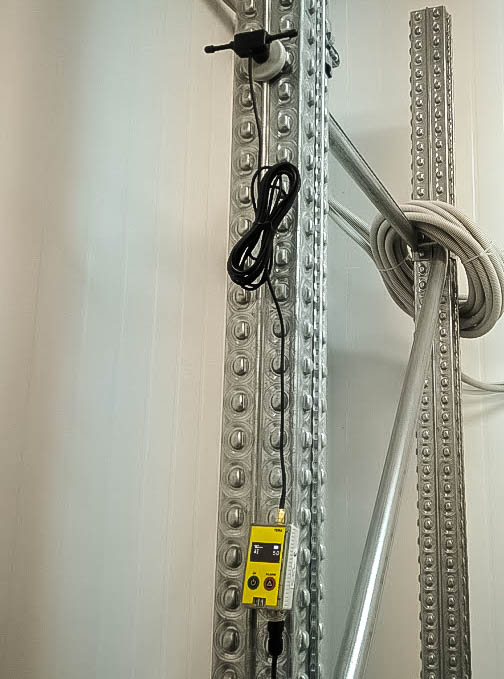
- Wireless GSM humidity and temperature data loggers equipped with a built-in GSM modem for transmitting data to the cloud server. The logger operates on the principle: wake up, measure, transmit, sleep. If mobile connectivity is unavailable, the logger stores the collected humidity and temperature data in its internal non-volatile flash memory.
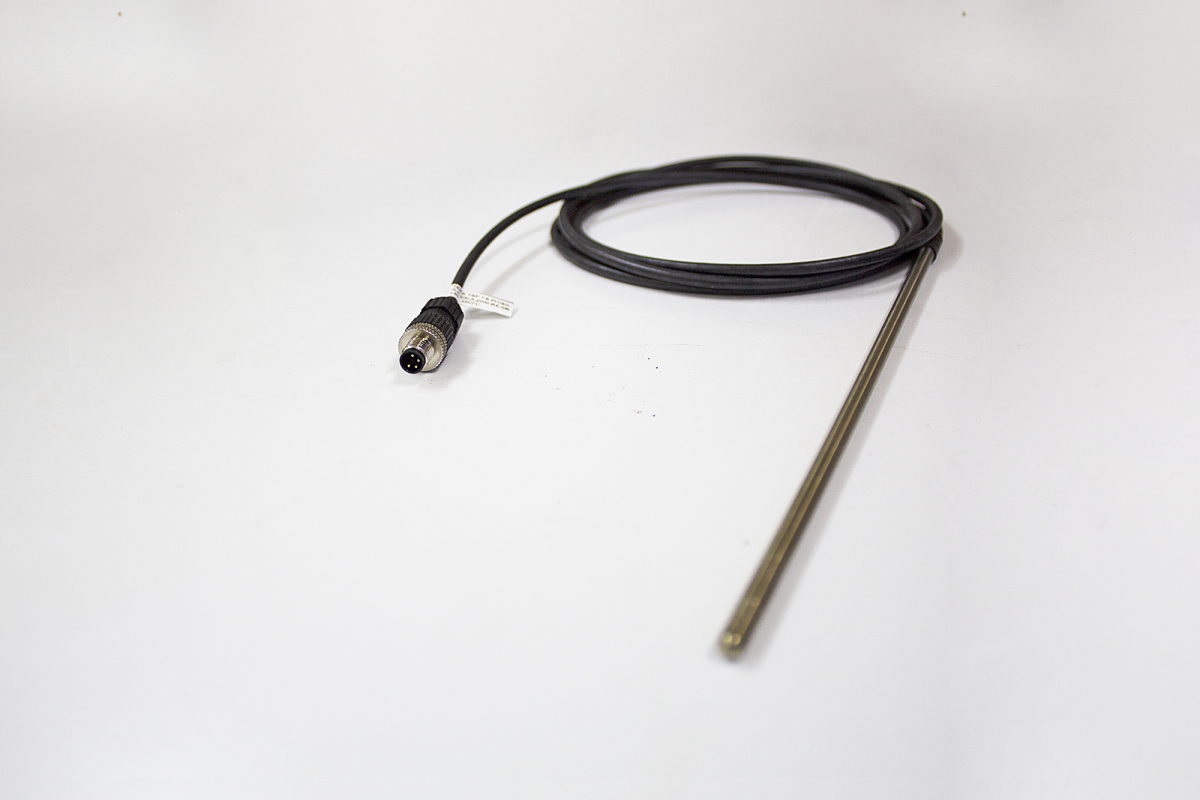
A high-contrast OLED display is used for indication, showing humidity and temperature values across all measurement channels. In addition, the display shows signal strength, battery charge level, and serial number. The logger is supplied with a rubber protective boot to safeguard it from shocks and drops, and features an integrated magnetic mount. The device includes two IP67 M8 connectors for attaching one or two external Pt1000 temperature probes or an SHT air humidity and temperature probe. A USB-C port is provided for connecting a charger. The replaceable 18650 lithium battery can be quickly swapped by the user when needed.
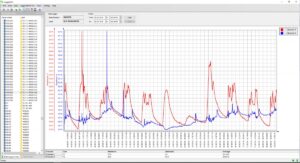
- Cold Chain Cloud SaaS service, which provides a user-friendly WEB HMI interface based on web technologies. The service is designed to perform all essential monitoring system functions in real time, including data collection, processing, visualization, and archiving; alarm notifications; database storage; user activity and event logging; access, role, and permission management; data export; report and chart generation, and more. To access Cold Chain Cloud, the user only needs an Internet connection and the Google Chrome browser.
STRUCTURAL DIAGRAM OF THE WIRELESS TEMPERATURE AND HUMIDITY MONITORING SYSTEM

FEATURES OF THE WIRELESS SYSTEM
Advantages of the wireless monitoring system:
- The most cost-effective solution for pharmacies, vaccination points, medicine storage rooms in hospitals or clinics, and food storage rooms in restaurants or cafés — that is, locations where one or several monitoring points within a single room are required.
- Wireless transmitters can be easily installed and removed thanks to their magnetic mounts, and the system can quickly be relocated to another facility when necessary.
- Simple installation that can be performed directly by the user.
- The wireless system can be used for equipment and room mapping (identifying critical points).
Disadvantages of the wireless monitoring system:
- The radio signal from the transmitter can be blocked by external obstacles (pallets with goods, walls, etc.) or by radio interference.
- The transmission range from the transmitter to the coordinator indoors without line of sight does not exceed 50–100 meters.
- Battery consumption depends on the polling interval (the more frequent the polling, the faster the battery drains).
- Practical polling interval is no more frequent than once per minute; recommended — once every 5 or 10 minutes.
- A monthly subscription fee is required for access to the Cold Chain Cloud service and for mobile Internet.
See also: